Email: info@boninscaffolding.com
WhatsApp: +86 136 4619 6162
Email: info@boninscaffolding.com
WhatsApp: +86 136 4619 6162

Email: info@boninscaffolding.com
WhatsApp: +86 136 4619 6162

Choosing the right prop is one of the fastest ways to keep a concrete job safe, on schedule and on budget. A heavy duty adjustable steel prop carries the weight of fresh concrete, beams and formwork until the structure can support itself. Pick the wrong size, wall thickness or finish, and you pay for it in bent tubes, slow stripping and extra rental cycles. This guide explains how to choose heavy duty adjustable steel props for construction and export, using the sizes and specifications Bonin Scaffolding supplies from its factory in Nantong, Jiangsu.
It covers what a prop is, how to match height and load, how Q235 and Q345 steel differ, which surface finish suits your site, and what to check before you place an export order. If you buy props for a contractor fleet, a rental yard or a distribution business, these are the checks that matter most.

A heavy duty adjustable steel prop, also called an acrow prop, a shoring prop or a telescopic prop, is a two-piece steel support used for temporary shoring. An outer tube of 60 mm slides over an inner tube of 48 mm. A prop nut locks the inner tube at the working height, and flat top and base plates spread the load onto the slab and the formwork. Turn the nut and the prop extends; turn it back and the prop closes for transport and storage.
Crews use heavy duty props under slab and beam formwork, for temporary shoring of ceilings and walls, for raking shores against excavation faces, and in falsework where a rigid, adjustable support is needed. Because the prop is adjustable, one size covers a range of floor heights, which cuts the number of different sizes a site must stock. Bonin’s heavy duty props have a wall thickness of 1.4–4.0 mm and adjust from 1.8–5.5 m.
Start with the clear height you need to support: the distance from the floor to the underside of the slab or beam, plus the thickness of the formwork, bearers and deck. A prop is sold by its closed and open length. Choose a size whose working range covers your height with room to spare — the prop should not sit at its very top extension on every pour.
Match the range to the job, not the other way around. Measure the lowest and highest soffit heights on the project, then order the smallest set of sizes that covers both. A prop kept near the middle of its travel is stiffer and easier to adjust than one run to full extension, and it leaves room to take up settlement as the concrete is placed.
For export buyers, a mix of height ranges in one container usually ships better than a single size. Put the size breakdown on your purchase order and mark every size on the packing list so the yard can find them without opening every bundle.

Load capacity is the number most buyers ask about first — and the one most often taken out of context. The safe working load of a prop is a curve, not a single figure: it drops as the extended height rises, and it assumes a straight, plumb prop, a level base plate and the load applied centrally. Always ask the supplier for the load table for the exact size, wall thickness and material you are buying.
Four things decide how much a prop can carry. Tube size sets the frame: a wider tube holds more load. Wall thickness adds strength directly: a thicker wall carries far more than a thin one at the same length. Q345 steel has a higher yield strength than Q235, so it holds more load in the same tube. Height works against you: a prop at full extension carries much less than the same prop at 2.5 m.
A prop that stands out of plumb or on an uneven plate loses capacity fast, so level the base and keep the prop vertical. Corrosion and dents reduce the effective wall thickness, so inspect used props before each cycle and retire tubes with cracks, flats or thread damage.
Light duty props and heavy duty props look similar, but they serve different jobs. A light duty adjustable steel prop uses smaller tubes, carries less load and costs less. It suits light slab formwork, small beams and short support periods.
A heavy duty prop is the choice when the slab is thick, the span is long or the support height is large. It carries higher loads at greater heights. Rental companies and distributors usually stock heavy duty props as their main range and add light duty props for lighter work.

The finish decides how long a prop survives on site and how it looks after a few rental cycles. Bonin supplies four finishes: self color, painted, hot-dip galvanized (HDG) and electro-galvanized. Each one suits a different job.
A prop never works alone. Before you order, check the accessories that connect the prop to the formwork and keep it upright: a U-head or fork head sits on top of the inner tube to carry bearers and beams; a cup nut or prop nut is the working nut that sets the height; flat top plates and base plates spread the load and protect the tube ends; a tripod holds a tall prop vertical while the formwork goes up.
Steel scaffolding prop accessories from Bonin include casting nuts, handle nuts, prop sleeve nuts, top and base plates, and tripods. Order the accessories with the props in the same container, so the shipment arrives as one working set instead of three separate deliveries.

| Specification | Details |
|---|---|
| Type | Heavy duty adjustable steel prop (acrow prop / shoring prop) |
| Material | Q235 / Q345 steel |
| Outer tube | 60 mm |
| Inner tube | 48 mm |
| Wall thickness (outer and inner tube) | 1.4–4.0 mm |
| Adjustable height | 1.8–5.5 m (other sizes on request) |
| Mechanism | Normal nut |
| Surface finish | Self Color, Painted, Hot-Dip Galvanized (HDG), Electro-Galvanized |
| Use | Slab and beam formwork support, temporary shoring, falsework |
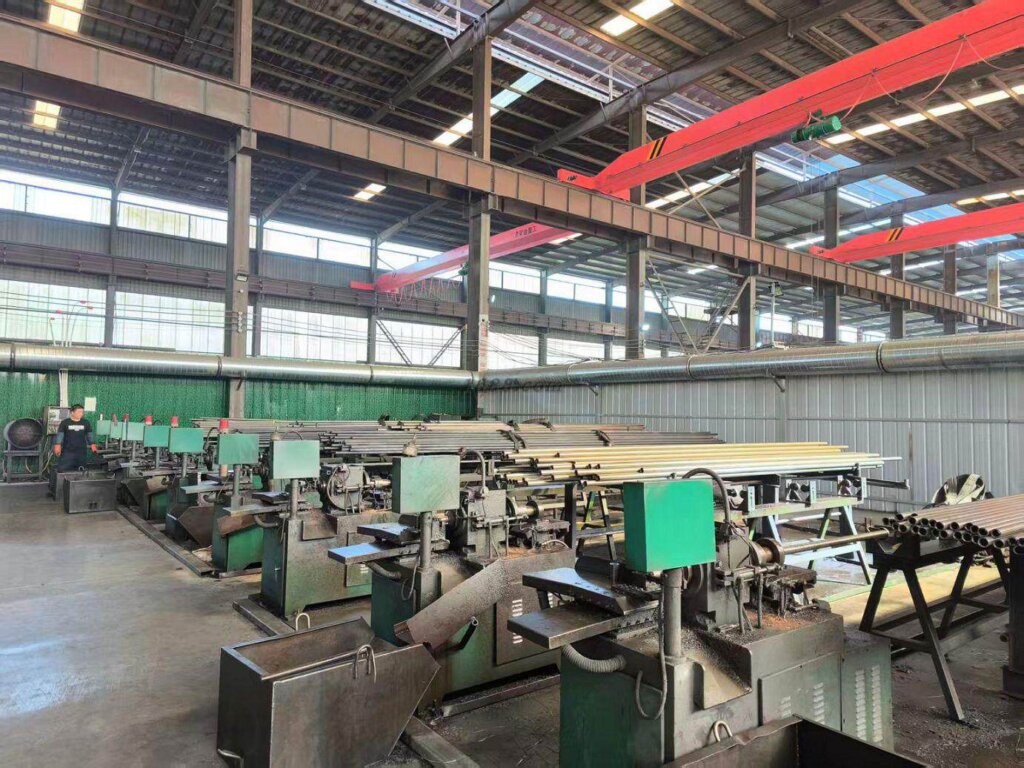
A good export order is agreed in writing before production starts. Confirm these seven points with your supplier and put them on the order:
Before placing your first order with any supplier, read How to Evaluate a Scaffolding Components Manufacturer Before Ordering — it covers the checks to run on a factory before you commit to a container. Bonin supplies distributors and contractors worldwide from its factory in Nantong, Jiangsu, and supports OEM/ODM orders with custom sizes, finishes, branding and packing.

Measure your soffit heights, then match them to the working range in the size section and specifications table.
Q345 carries more load than Q235 in the same tube — see the load capacity section. Use Q235 for standard formwork and Q345 for heavy slabs, long spans and tall support.
See the surface finish section above: HDG for outdoor, rental and coastal use; painted for normal building sites.
Yes — see the accessories section: U-heads hold bearers and beams on top of the prop, and tripods hold tall or freestanding props vertical.
Ready to order? Send your product list, sizes and quantities, drawings, the standard you need and your packing requirements to Bonin Scaffolding, and we will quote the props and accessories as one shipment. Contact Bonin Scaffolding to start your order.
